
When AI creates beauty: art or simulation?
We live in an era where visual creation has expanded beyond the lens. Photography, which for over a century relied on the act of looking, of capturing the moment, now shares its territory with algorithms that do not observe the world but reconstruct it with almost mystical precision.
Today, platforms like Midjourney, DALL·E, Stable Diffusion, or Firefly generate images capable of evoking emotion, seducing, and confusing. They can recreate faces that never existed, landscapes that never were, lights that never touched any object. And they do so with an unsettling beauty: a beauty without experience, without breath, yet no less effective.

In the face of this aesthetic avalanche, a question arises that divides critics, artists, and photographers:
Is beauty generated by artificial intelligence art... or a convincing simulation of it?
In this article, we propose looking beyond technical awe. To examine not only how beautiful AI-generated creations can be, but why we consider them beautiful, what they reveal about our relationship with images, and what danger or promise they hold for the future of photographic creation.
TABLE OF CONTENTS:
1. First glance: the beauty that deceives

The first reaction to an image generated by AI is usually awe. Perfect faces, studio lighting, precise framing: everything seems like the work of an expert photographer. However, a careful look reveals that perfection is precisely its mask.
AI does not observe or interpret; it synthesizes. It mixes millions of examples and returns an optimized result designed to please. That is why its beauty is, often, a complacent mirror of our expectations. It gives us what we want to see, not what the world truly offers.
In that tension between appearance and experience, the dilemma arises: the AI image may seem like art because it moves us, but it can also be pure simulation, a polished echo of the visual culture that already exists.
2. Aesthetics: Two families coexisting: realism and sensationalism
We can identify two major currents within AI-generated visual art:
The simulated hyperrealism, which seeks to resemble photography: natural light, texture, bokeh, minimal imperfections that deceive the eye.

Synthetic or sensationalist aesthetics, which frees itself from realism and creates impossible worlds, mutant figures, surreal visions that defy physics and logic.

In the first line, AI disguises itself as a photographer; in the second, as a painter or digital dreamer. And while both approaches can achieve visually impressive results, they rarely attain the conceptual depth that gives art its meaning. Because beauty without intention is just decoration.
3. Art or Simulation? Three axes to decide

Intentionality. Art arises from a human perspective. AI lacks desire, context, and history. If the human creator uses AI as a medium to express an idea, not merely to produce beautiful images, then it can be considered art. Otherwise, it remains automated aesthetics.
Originality. Generative models learn from millions of existing images. Their "creativity" is a recombination. Only human intervention—editing, discourse, narrative—can transform that invisible collage into an original work.
Relation to reality. Traditional photography maintains a direct connection to the real world: the light that hits the sensor comes from an existing object. In contrast, AI does not document, it imagines. Its beauty is purely synthetic, detached from the physical world. This brings it closer to digital art, but distances it from photography in its documentary or testimonial sense.
4. The flaws that reveal the machine
No matter how sophisticated they are, algorithms still make mistakes that a trained eye can recognize:
Extra fingers, improbable anatomies, soulless gazes.
Excessively polished or symmetrical textures.
Shadows that don’t match, impossible reflections, inconsistent details.
These flaws are, paradoxically, revealing. They remind us that AI does not understand the body or light—it calculates them. Its aesthetics lie in the "almost real," a threshold between the plausible and the false. And perhaps, in that boundary, resides its true artistic interest: in showing us the blurry line between the human and the synthetic.
If you want to learn more about the use of artificial intelligence in photos with models, we suggest reading this analysis: Digital Fashion and Photography with AI: Are We Ready to Abandon the Traditional Photoshoot?
5. Ethics and Aesthetics: Beauty Under Suspicion
The beauty generated by AI also carries an ethical burden. The images produced by these models are the result of learning from human works, many of which were taken without the consent of their creators. Additionally, algorithms inherit biases: they tend to represent Eurocentric beauty standards, idealized bodies, and perpetual youth. The result is a homogeneous aesthetic, one that risks erasing the diversity that art should, in fact, celebrate.
And when these images circulate without labels, mixed with real photographs, they erode trust in the image as a testimony. If everything can seem true, what value does photography retain as a document?
Frame from a Studio Ghibli film vs. an AI-generated image using the same style.
6.Visual Examples: Critical Reading of Images

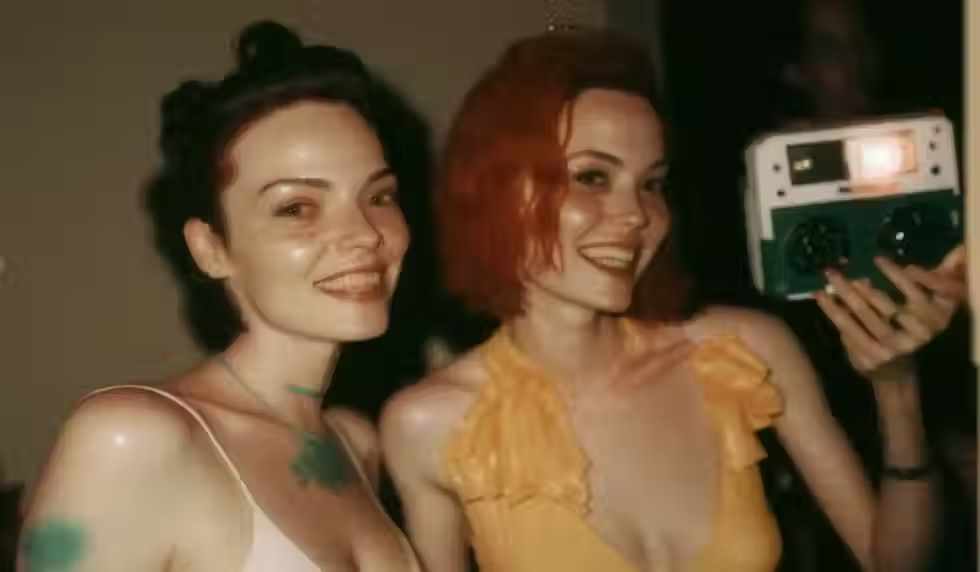
Image 1 (hyperrealistic): Intense gaze, hyper-defined skin. Here, AI replicates conventions of editorial portraiture; its aesthetic value depends on intention and context (editorial vs. documentary).

Image 2 (B/W street style): The black-and-white portrait evokes documentary photography. When AI imitates this grammar, the question arises about the testimonial truth of the image.
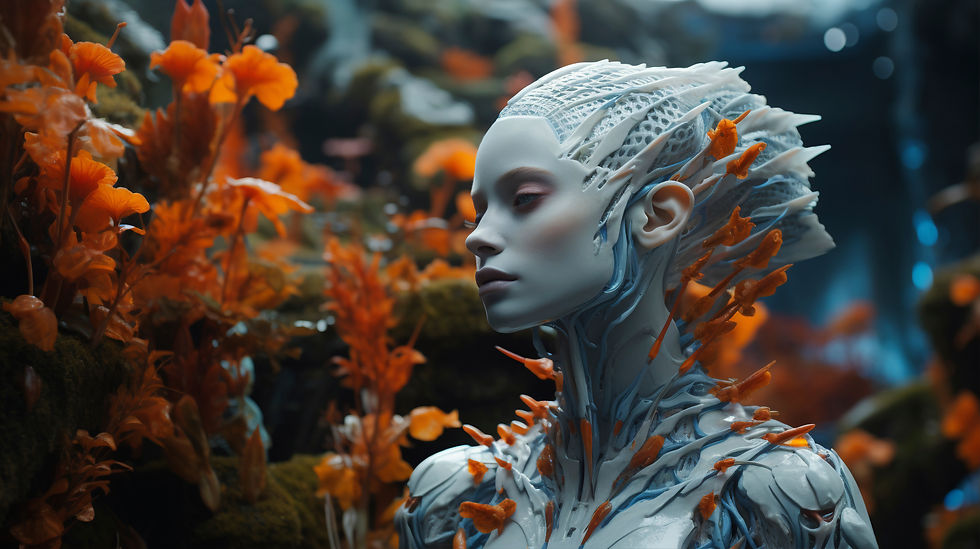
Image 3 (surreal): Impossible palette and elements; the work leans into the fantastical and frees itself from the pretense of "being a photo." Here, AI is closer to fantasy art than to photographic simulation.
7. Photography, AI, and Profession: A Challenge for Creators
At FotoProStudio, we believe the debate shouldn’t be about machine vs. human, but about how to look at and use technology. AI can be a tool for exploration, not a substitute for vision.
The photographer of the future may combine capture and generation: taking a real image, processing it with AI to expand its concept, and then manually intervening again. This hybridization could open a new phase in visual art: that of the augmented author, not the replaced one.
The beauty of AI is not innocent. It shows us what we expect from the world, but also what we fear losing: uniqueness, imperfection, gesture. If we accept its images without reflection, we turn art into an illusion of an algorithm. But if we confront them with a critical eye, they can help us better understand what gives a human or synthetic image its soul.
Artificial intelligence can create beauty. But only we can give it meaning.
What kind of AI-generated images do you create at FotoProStudio?
We generate three main types:
We transform mannequin or "flat" photos into realistic models (mannequin → model).
We create product images in "lifestyle" contexts with AI-generated backgrounds.
We can integrate jewelry into AI-generated models, maintaining fidelity to the design and texture.
How does the AI workflow work at your studio?
You send us photos of your garments, products, or mannequins ("brief").
Together, we define the visual style, level of realism, and desired aesthetics.
We generate several visual proposals with AI for you to choose from (previews).
We perform a very rigorous quality control, retouching necessary areas (shadows, edges, textures, colors), and adjusting until the result is professional.
We deliver the final files in high resolution, with formats adapted for e-commerce, catalogs, or social media, tailored to your needs.
What are the limitations of AI in your studio?
AI is not always ideal. We recommend avoiding it when:
100% fidelity is required in fabrics, prints, or complicated textures.
The garments have flows, complex wrinkles, or require a very specific pose.
Absolute realism is a priority (for example, in premium fashion campaigns with high detail). In these cases, we suggest combining AI with retouching or even a physical shoot.
How do you ensure the quality of AI-generated images?
Our process includes:
Initial validation of several AI-generated options.
Expert review by our photography and retouching team to correct artifacts, enhance shadows, edges, and textures.
Manual local retouching (cloning, cleaning, color adjustment) to ensure the product matches reality.
Adjustment rounds with the client even after the initial delivery to ensure satisfaction.
How do you guarantee that the images generated reflect my products accurately?
Starting from real photos of your garments or products, we ensure that the AI uses authentic data.
Post-production retouching is used to adjust color, texture, or details to faithfully match the real object.
We ask for visual references (moodboards, brand guidelines) to adapt to your visual identity.



Comments