
Nike vs Adidas: two opposing ways of photographing sport
In the world of sports advertising photography, few rivalries are as influential as that of Nike and Adidas. Both brands compete in the same global market, sponsor the same athletes, and fight for the attention of the same audience. However, when you closely examine their visual language, a clear difference emerges: they photograph sport in almost opposite ways.
More than selling sneakers or technical apparel, these brands sell an idea of what it means to practice sport. And photography is one of the key pillars that builds that identity.
In this article, we analyze how each brand represents movement, effort, and sports culture, and how those aesthetic choices define their positioning.

TABLE OF CONTENTS:
1. Nike: raw energy and athletic narrative
If there is one word that defines Nike’s photography, it is intensity.
The brand has built, over decades, a visual language centered on the physical and emotional energy of sport. Its images often convey muscle tension, speed, impact, and a strong sense of urgency. It is common to find tight framing, bodies captured mid-action, and high-contrast lighting that emphasizes the texture of sweat, skin, and physical effort.
Unlike more polished or stylized sports campaigns, Nike’s photography tends to feel direct, visceral, and authentic.
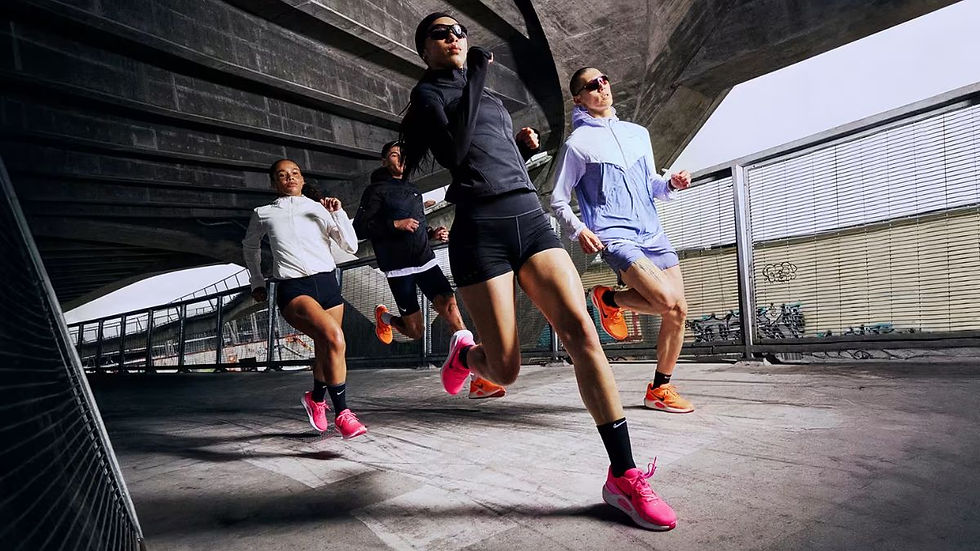
Athletes are shown at moments of maximum intensity: the jump before a dunk, the explosive start of a sprint, or the exact instant before striking the ball. In many cases, the photographer freezes the movement at its most dramatic point, creating images that convey power, determination, and sacrifice.
In addition, Nike uses photography as a narrative tool. Its images do not just show athletes or products, they tell stories of personal growth, perseverance, and ambition.
Many of its portraits have an almost cinematic tone: the athlete appears isolated, focused, ready for the challenge. The environment, lighting, and framing reinforce this sense of a personal battle.
This approach perfectly aligns with the brand’s core message: JUST DO IT.
Sport as an act of willpower and self-improvement.
Nike “Just Do It” advertising campaigns
2. Adidas: aesthetics, culture, and style
Adidas’ approach is notably different. Although the brand also produces powerful sports action campaigns, much of its visual language explores a more cultural, aesthetic, and social dimension of sport.
Instead of focusing solely on moments of maximum physical effort, Adidas often creates images where sport coexists with fashion, music, urban identity, and youth culture.
Adidas advertising photography
In many campaigns we find:
Cleaner and more balanced compositions.
Strong, clearly defined art direction.
Bold use of color and graphic design.
More stylized or choreographed poses.
A stronger presence of urban environments.
The athlete does not always appear in full action. In many images, they simply occupy the space with attitude, expressing style, personality, or cultural belonging.
This strategy is partly rooted in the brand’s history. Adidas has successfully positioned itself for decades at the intersection of sport, streetwear, and urban culture, especially through lines like Originals.
Adidas campaign featuring Kendall Jenner
That’s why many of its campaigns are closer to the visual language of editorial or fashion photography than to traditional sports photography.
3. Movement: explosion vs choreography
One of the most interesting differences between the two brands lies in how they represent movement.
In Nike’s case, movement is often photographed as a physical explosion. The images capture the most extreme moment of the athletic gesture: the peak of a jump, the full tension of a sprint, or the instant of impact in a play.
Compositions tend to be dynamic, with strong diagonals, tight framing, and highly intense body gestures. Everything is designed to convey speed, power, and competitiveness.
Nike advertising campaigns
Adidas, on the other hand, tends to approach movement in a more controlled and choreographed way. The gesture may be dynamic, but the composition maintains a sense of visual balance. The body integrates into a more refined aesthetic, where the athletic gesture also functions as a graphic element.
While Nike aims to convey adrenaline, Adidas often focuses on style and presence.

Adidas advertising photography
4. The athlete’s body: instrument vs cultural icon
Another interesting difference appears in how each brand represents the athlete’s body. In Nike’s photography, the body is shown as a performance machine. Tense muscles, sweat, breathing, and emotional intensity reinforce the idea of the athlete as someone who is constantly pushing their limits.
Nike advertising campaigns
In Adidas photography, the body often takes on a more iconic or symbolic presence. The athlete does not only represent performance, but also attitude, identity, or cultural belonging.
This is why many Adidas campaigns feature musicians, artists, or creative figures alongside athletes. Sport blends with culture.

5. Product photography: tool vs cultural object
The differences are also visible in how each brand photographs its products.
In many Nike campaigns, the shoe is presented as a performance tool. The photography emphasizes features such as lightness, cushioning, or speed. The product is integrated into the action: in the moment of a jump, the contact with the ground, or the propulsion phase of a run. Technology becomes part of the visual narrative.
Nike product photography
Adidas, on the other hand, tends to approach the product more like a design or style object. Sneakers are photographed with cleaner compositions, more controlled lighting, and art direction that resembles fashion or editorial product photography. This reinforces its positioning in a hybrid space between performance and urban culture.
Adidas product photography
6. The role of art direction
Another key factor behind these differences lies in the approach to art direction.
Nike tends to prioritize the energy of the captured moment. Many of its images feel as if they were taken in the middle of the action, even when they are carefully produced.

Adidas, on the other hand, tends to build campaigns where art direction plays a leading role. Settings, styling, color, and composition come together to create a highly recognizable aesthetic.
This does not mean that one brand is more spontaneous than the other; both work with large creative teams. However, the final visual result conveys different sensations.

7. Two identities built through imagery
The rivalry between Nike and Adidas highlights something fundamental about advertising photography: images do not just show products, they construct meaning.
Nike uses photography to reinforce a narrative based on effort, determination, and athletic performance. Its images aim to convey physical and emotional intensity.
Adidas, on the other hand, explores an identity where sport coexists with culture, aesthetics, and urban style.
Both strategies work because they are consistent with each brand’s DNA.
For photographers, art directors, and visual creators, this comparison offers an important lesson: photography is not just about technique or composition, it is about brand positioning. Every visual decision contributes to building a narrative. In the case of Nike and Adidas, that narrative shows that even within the same sport, there can be completely different ways of seeing and representing action.


Comments