
Integration of jewelry and models through AI: The future of editorial and product photography
The technological revolution has completely transformed the way images are created. One of the most fascinating advancements is the integration of jewelry with models through artificial intelligence (AI). This technique makes it possible to generate hyper-realistic photographs without the need for a physical photoshoot, seamlessly combining jewelry designs with virtual or real models in a natural and artistic way.
In this article, we explore how this process works, its advantages, current limitations, and how it is reshaping the fashion, jewelry, and editorial photography industries.

TABLE OF CONTENTS:
What Does It Mean to Integrate Jewelry with Models Using AI?
Integration through AI involves using artificial intelligence tools—such as image generators or machine learning–based editors—to digitally place jewelry pieces (rings, necklaces, earrings, bracelets) onto generated or photographed models, achieving a realistic, aesthetic, and cohesive result.
This approach is used in:
Editorial campaigns
Jewelry e-commerce
Digital catalogs
Creative and conceptual projects
Thanks to AI, it is now possible to create images that previously required expensive productions with models, stylists, photographers, and complex retouching.
AI-Generated Photographs – Directed by FotoPro Studio
How Does the Process Work?
Product Photography: The process starts with a product photo of the piece, usually isolated on a neutral background.
AI Image Generation: Multiple model images are generated using AI tools. Selections are made according to the brand’s style.
Retouching and Harmonization: Details such as lighting, color, and shadows are adjusted to achieve a natural and cohesive finish.
3. Advantages of Using AI in Jewelry Photography
Cost Reduction: No physical production or studio rental is needed.
Speed: Multiple versions can be created in a short time.
Creative Flexibility: Different styles, models, settings, and compositions can be tested.
Accessibility: Ideal for small brands or independent designers.
Visual Consistency: Ensures a cohesive aesthetic across all pieces.
Additionally, AI allows for visual experimentation with combinations that would be expensive or difficult to achieve in real life.
Some companies have already started using AI in their imagery. In this article, we show examples: AI-generated images: how brands like Zara, Stradivarius, and Coca-Cola are creating campaigns.
AI-Generated Model Photographs – Directed by FotoPro Studio
Current Limitations to Keep in Mind
Although the possibilities are broad and exciting, it is important to understand that AI still has certain limitations that should be considered when planning a project.
Model Consistency
While generated images can be highly realistic, AI cannot guarantee the same model with identical features in every shot. Each image is a “new calculation,” which may result in variations in the face, proportions, or expression.
Product Fidelity
Integrated jewelry may show slight distortions or simplifications in fine details. Although results are manually adjusted to match the original design, absolute fidelity cannot be guaranteed, making expert professional retouching necessary.
Creative Control
We can guide the output (pose, background, lighting, style), but AI does not offer complete control. This can lead to differences between images within the same series.
AI-Generated E-commerce Model Photographs – Directed by FotoPro Studio
Recommended Use
These images are ideal for:
Campaign previews
Projects with an artistic focus
Conceptual visual proposals
However, they do not fully replace a professional photoshoot when absolute product accuracy or model consistency is required.
In summary, AI is a powerful tool to enhance creativity and streamline processes, but its results should be viewed as complementary rather than a complete substitute for professional studio photography.
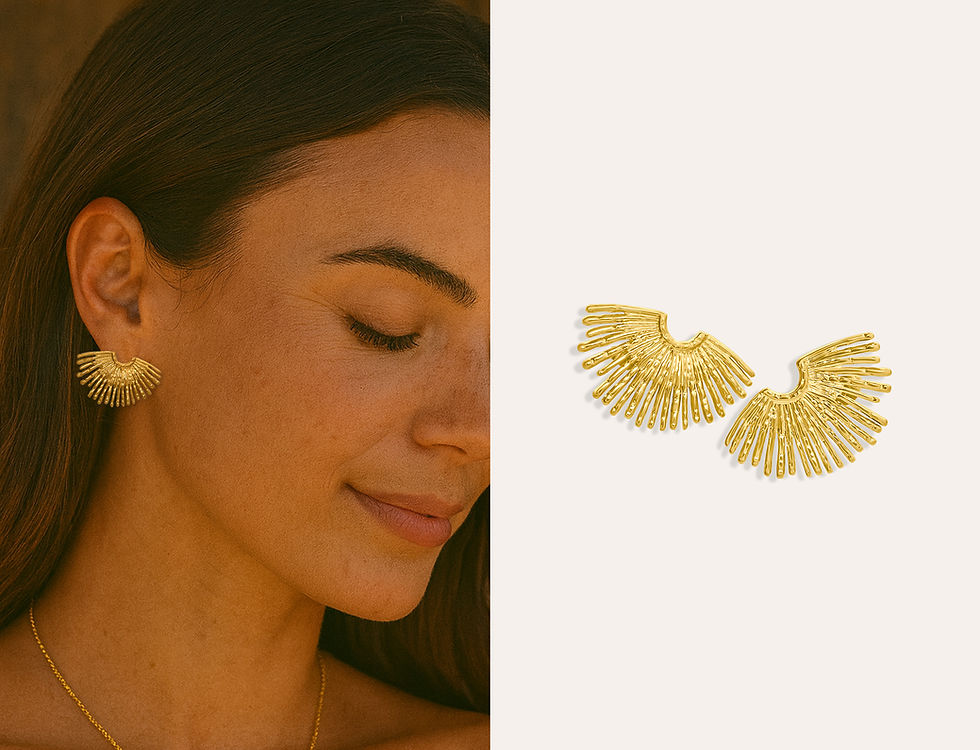
The Impact on the Creative Industry
The combination of AI and photography is redefining the future of visual content. It’s no longer just about capturing an image, but about creating personalized visual worlds where every detail tells a story. For photographers, designers, and brands, this opens up new creative opportunities and enables a more agile and sustainable workflow.
The challenge lies in balancing AI’s creative potential with the control and authenticity provided by the human eye.
Integrating jewelry with models using AI is an innovation that brings together the best of design, technology, and visual creativity. It allows for the creation of striking, realistic, and versatile images suitable for any medium—from fashion editorials to digital catalogs.
Even with its current limitations, AI represents a highly valuable tool for exploring ideas, visualizing concepts, and creating unique content. The future of jewelry photography is already here: intelligent, accessible, and full of possibilities.
Are you interested in integrating jewelry with models using AI, or do you need professional photographs of your pieces?
At our studio, we offer both AI-based integrations and real studio photoshoots to showcase your jewelry with the highest quality and fidelity.
Contact us, and we’ll help bring your brand to life with unique and professional imagery.
What Does It Mean to Integrate Jewelry with Models Using Artificial Intelligence?
It means using generative AI tools to place digital jewelry pieces (rings, necklaces, earrings, bracelets) onto virtual or real models, producing hyper-realistic images without the need for a physical photoshoot. This technique combines design, photography, and technology to create natural, aesthetic, and cohesive visual results.
Can It Completely Replace a Traditional Photoshoot?
No. While AI can generate impressive results, it still has limitations: there may be variations in the model’s features, slight differences in jewelry details, and a lack of full control over pose or lighting. For this reason, AI is recommended as a complementary tool, not a full replacement.
When Is It Recommended to Use These Images?
AI-generated images are ideal for:
Previewing campaigns before investing in a real production.
Artistic or conceptual projects.
Quick visual proposals for presentations or moodboards. However, when absolute precision is required, a professional photoshoot remains the best option.
What Impact Does This Technology Have on the Creative Industry?
AI is redefining editorial and commercial photography, offering new ways to create visual content without always relying on physical productions. It opens opportunities to experiment, innovate, and optimize resources, though the challenge remains in balancing technological creativity with the authenticity of the human eye.


Comments