
This is how a campaign is thought out: A critical guide to the creative process, using the Dove case as a mirror
If you haven’t seen the Dove Real Beauty Sketches video yet, I recommend you watch it before continuing. You’ll understand better what follows. It’s not just an ad: it’s a key piece to read this analysis with a different perspective.
1. Campaigns are not born, they are built
Behind every image that moves or goes viral, there is more than just a good idea. There's strategy, method, and many conscious decisions. Crafting a campaign is not about waiting for a muse to show up: it’s about asking uncomfortable questions, understanding the context, and knowing what to show... and what not to.
The difference between an aesthetic execution and solid creative direction is that the latter knows why it does what it does. And most importantly, for whom. Not all brands dare to look inward before speaking outward. Dove did. At least, for a moment.
2. The creative process: what’s not seen
Before there are cameras, storyboards, or moodboards, there’s something much more important: meaning. The creative process doesn’t start when the light turns on in the studio; it starts when someone dares to ask why we’re doing this. And for whom.
It’s not just about having an idea, but about stretching it, contrasting it, subjecting it to the context. Because a good idea that ignores reality can turn into noise. But a good idea with awareness becomes a message.

A creative process with intention answers (though not always explicitly) these questions:
What’s happening in culture right now?
What does the audience feel, fear, or desire?
What part of that can and should we touch?
What do we not want to say, even if it’s trendy?
What format gives the idea the most strength?
How will this look in 10 years?
And above all:
What effect do we want to provoke beyond the click?
Are we reinforcing an imagery... or questioning it?
Creativity is not an aesthetic talent. It’s a narrative responsibility. Without these questions, there’s only surface. With them, direction appears. And that makes all the difference.
3. Real case: Dove Real Beauty Sketches
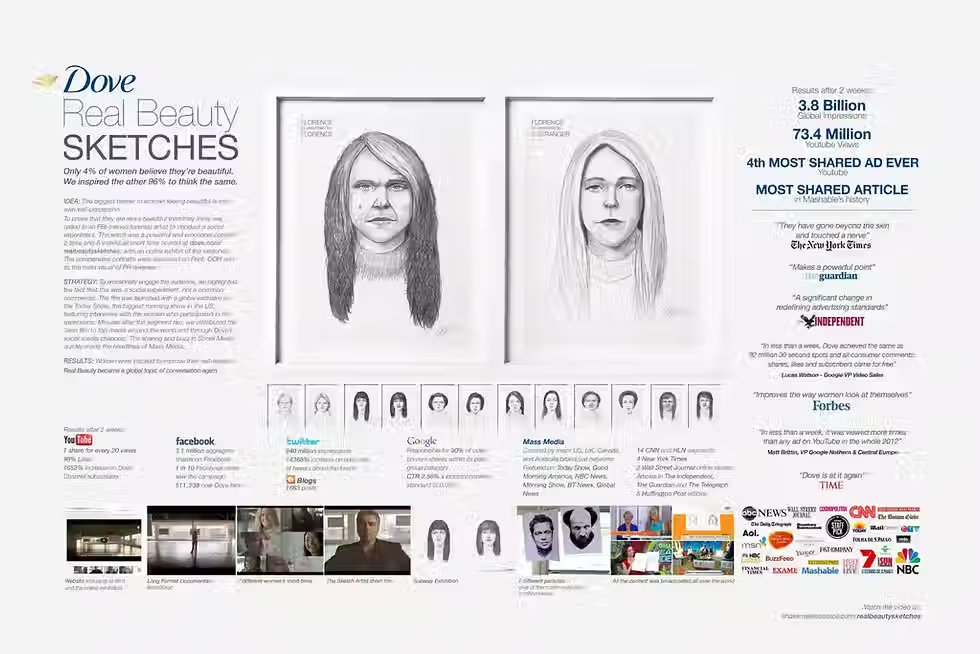
The context: In 2013, Dove launched a video that quickly became a global phenomenon. The ad shows an FBI forensic sketch artist drawing portraits of women based on two descriptions: their own and that of a stranger who has just met them. The result is striking: women describe themselves more harshly than others perceive them. The difference between the two portraits is the central piece of the campaign.

The insight: Women have a more negative image of themselves than others perceive, and this affects how they feel and interact with their surroundings. An emotional, powerful, universal insight.
The execution:
Minimalist direction: neutral background, no makeup, no heroic music.
Emotional casting: real, diverse women (within a range).
Realistic narrative: testimonies, interviews, contained emotion.
The forensic artist as an objective authority figure.
The tone: intimate, empathetic, therapeutic. The message: "You are more beautiful than you think."

The contradiction: Dove is part of Unilever, which simultaneously advertised other brands with an openly sexist approach (such as Axe or Fair & Lovely). To what extent was the message genuine or a differentiation strategy?
4. What worked (and why)
Emotional, not melodramatic: it touched the heart without forcing tears. The emotional appeal relied on authenticity, not manipulation. The tears weren’t triggered by epic music or scripted speeches, but by a simple, real, intimate dynamic.

Universal insight, concrete execution: what one feels, many understand. The conflict wasn't external, but internal: self-perception. This choice allowed the message to transcend cultural and generational boundaries.
Visually clean: nothing distracted from the message. The neutral background, absence of makeup, soft lighting, and close-up shots reinforced the focus on emotions. It wasn’t a "pretty" campaign; it was deliberately sober, to leave space for what’s essential.
Cultural relevance: it arrived at a time when mainstream feminism was growing, but hadn't yet fully infiltrated advertising. Dove was able to capitalize on that gap and positioned itself as a pioneer in a discourse that many brands would later try to replicate, not always with honesty.
Engaging narrative: showing the two portraits consecutively created a mirror effect for the audience. The storytelling served the insight, not the other way around.
5. What remained in doubt
Empowerment or paternalism? Telling women they are beautiful—does it empower them, or does it keep focusing on their appearance? Although the tone of the campaign is gentle, the central value remains beauty. It doesn’t challenge the system that imposes standards; it only suggests that women might not be seeing themselves well within it.
Real diversity or strategic diversity? The women shown were real, yes, but mostly still fit within socially acceptable beauty standards: fair skin, normative bodies, no visible disabilities, or profiles that truly broke the mold. Inclusion was measurable, but not necessarily transformative.
Brand consistency or emotional washing? Dove launched this campaign at the same time other Unilever brands promoted radically opposite messages. Axe, for example, built its image on a hyper-sexualized, masculine ideal. To what extent did Dove speak in its own voice, or was it just playing at ethical branding while its parent company continued operating under contradictory logic?
Deep change or aesthetic gesture? Did the campaign have real internal consequences? Did it change anything in the creative teams, product policies, or the brand’s representation chain? Or was it simply a brilliant move in emotional marketing? Because a campaign can be sensitive... and still be superficial.
This tension between intention and structure is what many brands still fail to resolve. What truly differentiates a well-thought-out campaign is not just its aesthetics or its virality, but what it leaves behind after the applause fades.
6. Conclusion: Not everything is storytelling
A campaign is not what is seen. It’s what is decided to be shown... and what is chosen to be left unsaid.
The campaigns that leave an impact are not only remembered: they are questioned.
And if it doesn’t leave any questions, then it wasn’t an idea. It was just aesthetics with a budget.
Dove did it right because they understood that a powerful campaign doesn’t start with an image, but with a question. But they also made it clear that a good campaign is not enough if it isn’t backed by structural transformation.
A truly thoughtful campaign not only evokes emotion. It unsettles, reveals, and commits. The rest is just storytelling with good background music.


Comments